



The Short Answer
- Need more headroom and floor space? Go dormer.
- Need more daylight and better ventilation? Go roof window.
Not sure?
Most Yorkshire homeowners who just want a brighter, more usable loft find that roof windows solve 80% of the problem at about 20% of the dormer cost. Start there. You can always add a dormer later.
Want to Know What Your Loft Actually Needs?
We’ll come out, look at your roof, measure the headroom, and tell you honestly whether roof windows will do the job or whether you genuinely need a dormer. No charge, no pressure. Book a free loft survey here
What’s the Actual Difference?
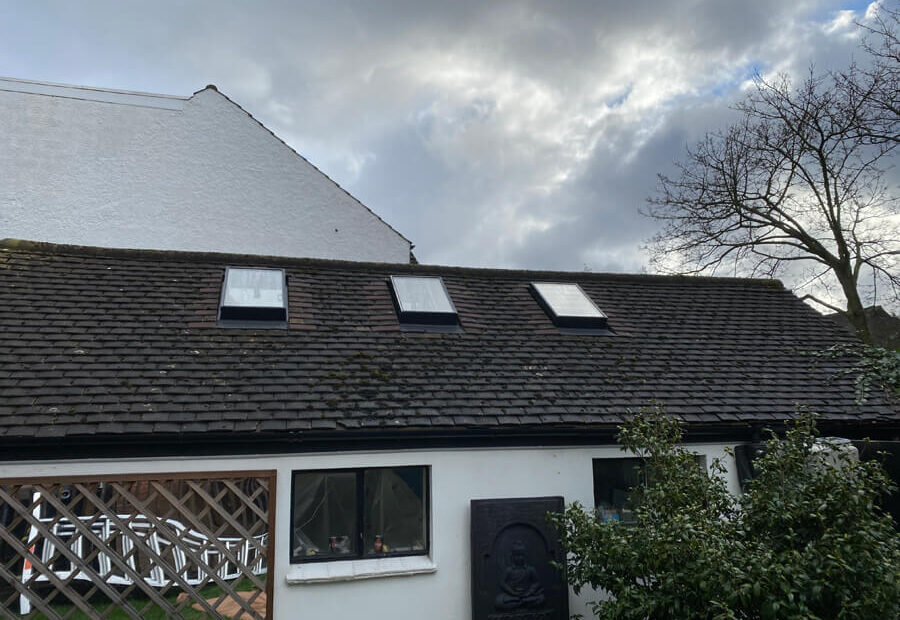
A roof window (VELUX is the brand most people mean) sits flush in the slope of your existing roof. Nothing changes structurally on the outside. Light pours in from above, you get ventilation, and the whole job takes a day or two. Our installations page covers the process in detail.
A dormer is a structural box that projects out from the roof, creating vertical walls and a flat or pitched mini-roof on top. It physically adds floor space and standing headroom where there wasn’t any. It also takes weeks, costs thousands more, and usually needs scaffolding, structural steel, and — depending on where you live in Yorkshire — planning permission.
“A roof window improves the loft you’ve got. A dormer builds you a new room.”
Side-by-Side Comparison
| Roof Window | Dormer | |
|---|---|---|
| Typical cost | £1,200 – £3,000 per window (fitted) | £20,000 – £50,000+ |
| Extra floor space | None — works within existing roof | Yes — significant gain |
| Extra headroom | None | Yes — vertical walls created |
| Natural light | Excellent — 2–3x more than wall windows | Good, but less than overhead light |
| Installation time | 1–2 days | 4–8 weeks |
| Planning permission | Rarely needed | Often required |
| Building regulations | Yes — but simpler | Yes — more complex |
| Disruption | Minimal | Significant (scaffolding, noise, dust) |
| External appearance | Subtle — roof line unchanged | Visible change to the house |
| Resale value | Moderate uplift | Higher uplift (adds liveable space) |
Planning Permission: The Yorkshire Reality
Roof windows almost never need planning permission. They fall under permitted development as long as they don’t project more than 150mm from the roof or sit above the ridge. Our planning permission guide has the full detail.
Dormers are a different story. A rear dormer on a detached or semi-detached house in Yorkshire will usually fall under permitted development, but front-facing dormers almost always need a full planning application. If you’re in a conservation area — parts of Beverley, York, Harrogate, the Hull Avenues — expect tighter restrictions on both. The GOV.UK permitted development guidance spells out the volume limits: 40m³ for terraces, 50m³ for everything else.
Both options require building regulations approval — but for a roof window it’s straightforward, especially if your installer is on a competent person scheme. For a dormer, expect structural calculations, multiple inspections, and a longer sign-off process.
When Roof Windows Are the Smarter Choice
This is our bread and butter, so we’re biased — but we’re also honest. Roof windows are the better option when:
- Your loft already has decent standing headroom (1.8m+ at the ridge)
- The main problem is darkness, not space
- You’re on a tighter budget and want maximum impact per pound
- You don’t want weeks of scaffolding and builders in the house
- You’re preparing to sell and want a quick, visible improvement
A pair of loft roof windows in a Yorkshire terrace or semi can make the difference between a loft that’s a dumping ground and one that’s a genuine room. For around £2,500–£5,000, fully fitted. That’s a fraction of a dormer.
When You Genuinely Need a Dormer
Dormers earn their price tag when:
- You can’t stand up in your loft at all — the pitch is too low
- You’re creating a proper bedroom or en-suite that needs full-height walls
- Furniture (bed, desk, wardrobe) won’t fit under the slope
- You need the space to meet building regulations for a habitable room, including a fire escape window at the right height
Plenty of homes end up with both — a dormer for the headroom, plus roof windows on the opposite slope for light. That’s actually the ideal loft conversion setup, and it’s one we see all the time across Hull, York, and Scarborough.
Three Mistakes to Avoid
- Assuming you need a dormer when you don’t. We’ve visited hundreds of Yorkshire lofts where the homeowner was quoted £30k for a dormer and all they actually needed was two VELUX windows and some boarding. Get a second opinion before committing to the bigger job.
- Choosing purely on cost. If your loft genuinely can’t be used without a dormer, skimping on roof windows alone won’t solve it. Be honest about what the space needs.
- Forgetting about light. A dormer adds space but the vertical windows in a dormer cheek let in less light than a roof window of the same size. If you’re building a dormer, budget for at least one roof window on the opposite slope. Your loft will thank you.
Not Sure Which Way to Go?
We do this every week. We’ll measure your loft, tell you whether roof windows will give you what you need, and if a dormer genuinely makes more sense, we’ll say so — we’d rather be straight with you than sell you something that won’t solve the problem. We cover Hull, Beverley, York, Scarborough, Harrogate, and the whole of Yorkshire.
Get your free loft assessment here or call us to book a visit.
Sources:
- GOV.UK — Permitted development rights for householders
- Planning Portal — Building regs for rooflights
Yorkshire Roof Windows is an independent, VELUX-trained installation company serving Hull, East Yorkshire, and the wider Yorkshire region.